
















Juventus Collapses in Istanbul: Galatasaray Exploits Defensive Flaws in Champions League Playoff
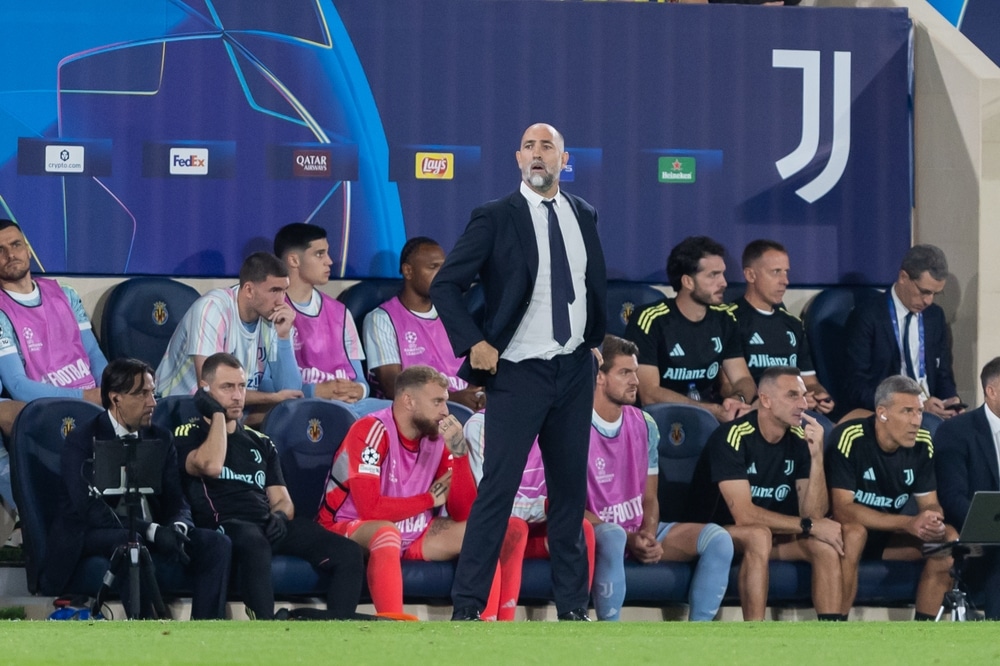
Juventus’ journey to Istanbul for the opening leg of the UEFA Champions League knockout phase playoffs promised high-stakes drama, particularly given the recent trajectory of the Italian giants. Under the guidance of Luciano Spalletti, who took the reins last autumn, the Bianconeri have shown signs of a resurgence. A revitalized offensive strategy has kept them competitive in the Serie A top-four race, highlighted by Spalletti’s bold tactical decision to deploy U.S. international Weston McKennie as a central striker. For the first 45 minutes against Galatasaray, the plan appeared to be working perfectly. Juventus headed into the interval with a 2-1 lead, thanks to an unexpected first-half brace from Teun Koopmeiners.
A Second-Half Capitulation in Turkey
However, the momentum shifted violently after the restart. Noa Lang leveled the score in the 49th minute, and by the hour mark, Davinson Sanchez had put Galatasaray ahead. While these goals reflected an increasingly open and competitive match, the true turning point arrived shortly after. In the 67th minute, Juan Cabal—who had only entered the game as a halftime substitute—received a second yellow card. His dismissal left Juventus a man down and effectively dismantled any remaining tactical discipline within the side.
With a numerical advantage, Galatasaray seized full control. The floodgates opened as the Turkish side relentlessly pressured a fractured Juventus defense. Lang secured his second goal of the night in the 75th minute, and Sacha Boey added a fifth in the 86th minute to finalize the rout. While the red card was a catalyst, the visitors’ defensive unit had struggled long before the sending-off, appearing disorganized against Galatasaray’s aggressive frontline.
Historical Defensive Struggles Come to the Forefront
The scale of this defeat was historically significant for Juventus. The club had not conceded five or more goals in a European knockout fixture since a 1958-59 encounter against Austria’s Wiener SC. While Spalletti has successfully increased Juventus’ scoring output, defensive stability remains an elusive goal. Throughout their current Champions League campaign, the team’s metrics at the back have been underwhelming. In eight league phase matches, they conceded 10 goals from an expected goals against (xGA) of 11.64, a figure that ranked them 16th in the competition.
While Juventus managed three clean sheets toward the end of the league phase, those results came against lower-ranked opposition such as Pafos, Benfica, and Monaco—teams that struggled to produce goals. Galatasaray, possessing a more potent attack, was perfectly positioned to exploit these existing cracks. Even without Victor Osimhen finding the net, the hosts demonstrated a clinical edge that has put them on the verge of their deepest Champions League run in over a decade.
The Paradox of Spalletti’s Tactical Success
The irony of Juventus’ current predicament is that Spalletti’s offensive innovations have been objectively successful. Before his arrival, the team averaged 1.5 goals from 1.4 xG; under his tenure, those numbers have climbed to 1.8 goals and 1.9 xG per match. This improvement is particularly impressive given that the squad lacks traditional elite-tier forwards. Spalletti has found ways to maximize the potential of his roster, with Koopmeiners’ brace and McKennie’s assist serving as recent examples.
Weston McKennie, in particular, has evolved from a versatile utility player into a vital attacking component. With seven goals and five assists across all competitions this season, he is currently enjoying the most productive goal-scoring campaign of his career. However, even an overachieving attack cannot indefinitely compensate for a porous defense. By the time Cabal was sent off, Galatasaray had already generated 2.28 xG compared to Juventus’ 1.11. Once reduced to ten men, Juventus failed to register another shot, while Galatasaray comfortably added two more goals to their tally.
Final Thoughts on Juventus’ European Standing
This result in Istanbul highlights a troubling long-term trend for the Italian powerhouse. Since their appearance in the 2016-17 Champions League final, Juventus has struggled to maintain its status among Europe’s elite, reaching the quarterfinals only twice and failing to progress past the Round of 16 since 2022. The 5-2 loss suggests that while Spalletti’s tactical shifts have made the team more entertaining and dangerous in the final third, the fundamental lack of defensive structure makes them highly vulnerable in knockout football. Unless Juventus can find a balance between their new-look attack and a reliable back line, their era as a dominant force on the continental stage may continue to fade into the past.